Mortal Online 2 thrives on the intensity of player-versus-player (PvP) combat. Its open-world sandbox design is built around risk, conflict, and emergent gameplay, where every encounter can shift the balance of power. But with the Reckoning Expansion’s rework of the Nation Standing system—particularly the steep -30 reputation penalty for murder reports—players are grappling with a new tension between freedom and consequence.
Nation Standing Rework: A New Layer of Accountability
The Reckoning Expansion introduced a major overhaul to the reputation system, expanding the Nation Standing scale from -100 to +100 to a more granular -1000 to +1000. This change allows for more nuanced tracking of a player’s standing across different nations and clades. Crucially, it also introduced differentiated penalties based on the severity of criminal actions:
- Being reported for murder now results in a -30 Standing loss.
- Being sighted by guards as a criminal causes a -5 Standing loss.
This shift is designed to reflect the gravity of murder in the game’s lore and society, but it has sparked concern among PvP-focused players. In a game where combat is not just encouraged but essential, such a heavy penalty can feel like a deterrent to engaging in the very gameplay that defines Mortal Online 2.
PvP: The Lifeblood of Mortal Online 2
PvP isn’t just a feature in Mortal Online 2—it’s the foundation of its identity. The game’s ecosystem is shaped by conflict, and its most thrilling moments arise from unpredictable player interactions. Three key systems amplify this dynamic:
- Relics: These powerful artifacts spawn in the world and become instant flashpoints for conflict. Guilds and solo players alike race to claim them, sparking skirmishes and large-scale battles that ripple across the server.
- Invasions: Periodic PvE events like Tagmaton incursions force players to band together—or clash over control of the battlefield.
- Dungeon PvP: Deep within the game’s labyrinthine dungeons, players fight not only monsters but each other. These high-risk zones are rich with loot and danger, making them prime arenas for ambushes, duels, and guild-on-guild warfare. Undercroft shouldn't be the only wilderness dungeon, but all them except sewers.
Together, these systems ensure that PvP is not just viable—it’s vital. They create tension, reward skill, and drive the game’s economy and politics. Penalizing players too harshly for engaging in this core gameplay loop risks undermining the very spirit of Mortal Online 2.
Finding a Middle Ground: Suggestions for Improvement
To preserve the game’s brutal charm while respecting the lore-driven reputation system, a more flexible approach could be adopted:
- Contextual Penalties Based on Location: A -30 reputation loss may be appropriate in high-security zones like towns or near guard towers, where law and order are expected. But once players venture into the wilderness—far from civilization—the penalty should scale down. In remote areas, a -5 loss would better reflect the lawless nature of the frontier and encourage open-world PvP without excessive punishment.
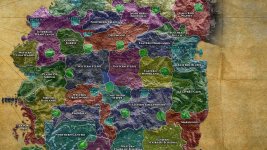 Blue areas around towns would be the -30 rep loss, just an idea.
- Reputation Recovery Through Tasks: Players should have meaningful ways to rebuild their reputation. Increasing the gain from tasks and daily tasks tied to reputation recovery would give players a path to redemption without feeling trapped by a single mistake.
Conclusion: PvP Must Be Protected, Not Punished
Mortal Online 2’s strength lies in its brutal, unpredictable PvP. The reputation system should enhance this experience—not stifle it. While the Nation Standing rework adds depth and realism, it must be balanced with the game’s core identity. Players need room to fight, conquer, and survive without fearing disproportionate punishment.